
Carbon solution
LTS uses fuel and electricity data measured in the vehicle to calculate per-cargo emissions
LTS Cloud calculates per-cargo emissions in line with ISO 14083 and the GLEC Framework, and primary contractors report the results to shippers. Carriers issue EACs for reductions from switching to electric transport.
Problem
Primary contractors cannot collect partner vehicles' fuel records,so they estimate with average fuel economy and European factors
Emissions calculated from receipts and average fuel economy do not meet the level of verification shippers require.
For heavy trucks, products that use European emission factors produce results 22% different from LTS, which uses Korean emission factors.
When one vehicle carries cargo for several shippers, emissions cannot be allocated by shipper.
Calculation and reporting
Primary contractors check per-cargo emissions in LTS Cloudand create shipper reports directly
Shows WTW emissions breakdown and emissions trends by period.
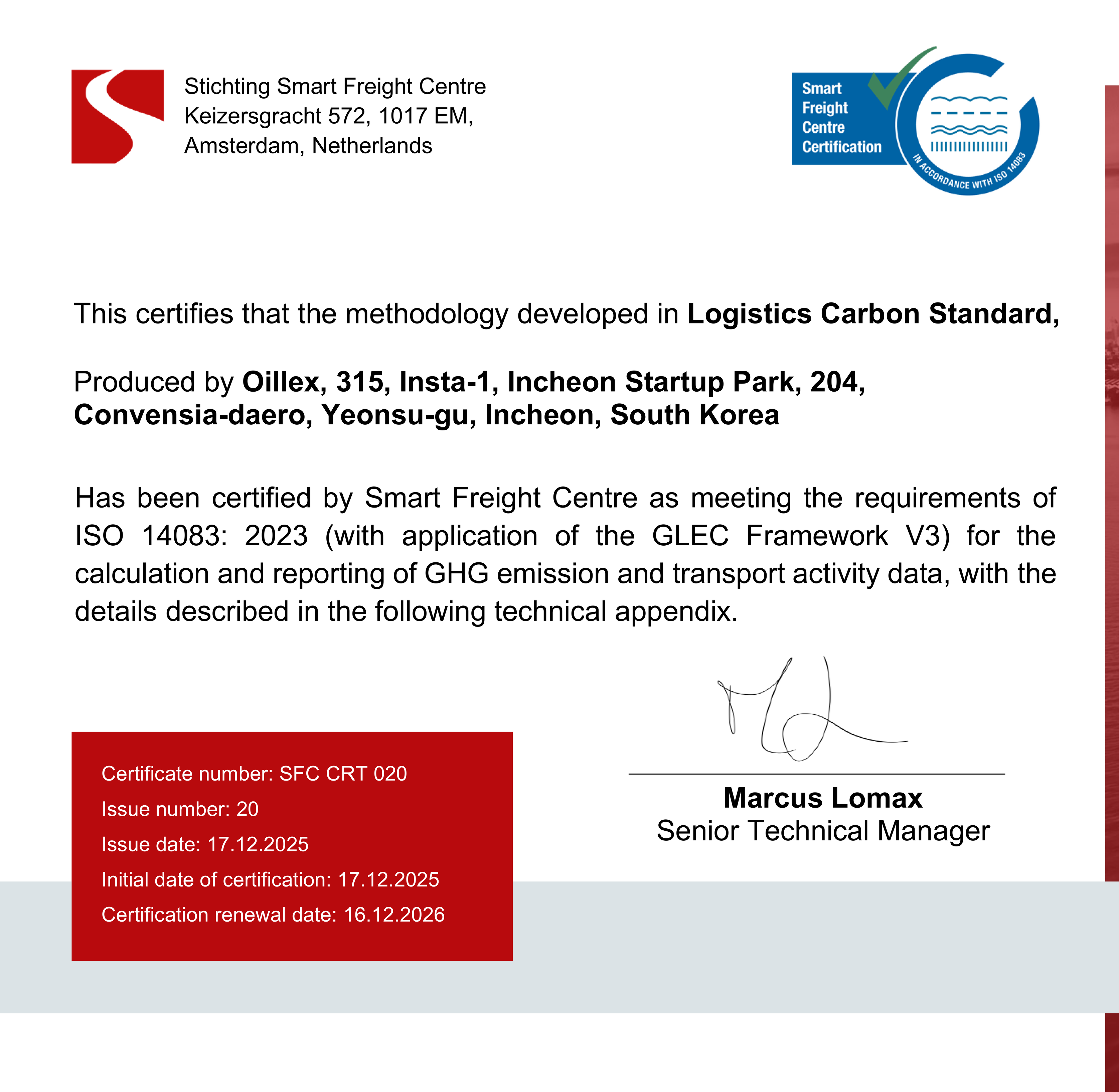
SFC certification CRT 020
LTS Cloud is the first tool in Koreacertified by SFC under the GLEC Framework
LTS Cloud calculates Well-to-Wheel emissions in line with ISO 14083:2023 and GLEC Framework V3. It calculates with Korean emission factors, and for heavy trucks the results differ by 22% from products that use European factors.
- ISO 14083:2023
- GLEC Framework V3
- Well-to-Wheel
- Korean emission factors
EACs issuance
LTS issues EACs for reductions from switching to electrictransport and connects them through to sale
Reductions from passenger and freight vehicles switched to electric buses, electric trucks and port cargo-handling equipment can be issued as EACs. LTS is currently the only company issuing transport EACs in Korea.
- 123Carbon — the only EACs registry in the world; LTS is its official agent
- Carboninsets — the only exchange for EACs; business cooperation with LTS
- Issuance accepts only reduction data from the most recent year
Issuance deadline
If a carrier switches to electric but does not issue EACs,that year's reductions are lost and cannot be recovered
EACs issuance accepts only reduction data from the most recent year, and issuance is possible only within 10 years of the vehicle's first purchase.
Talk to us
LTS presents a carbon calculation setup that fitsyour transport modes and shipper reporting scope
In a consultation, an LTS representative explains the scope and terms of adoption for your fleet size and partner-carrier structure.